Back to What is Business Analysis Section 2.1

CoreFundamentals

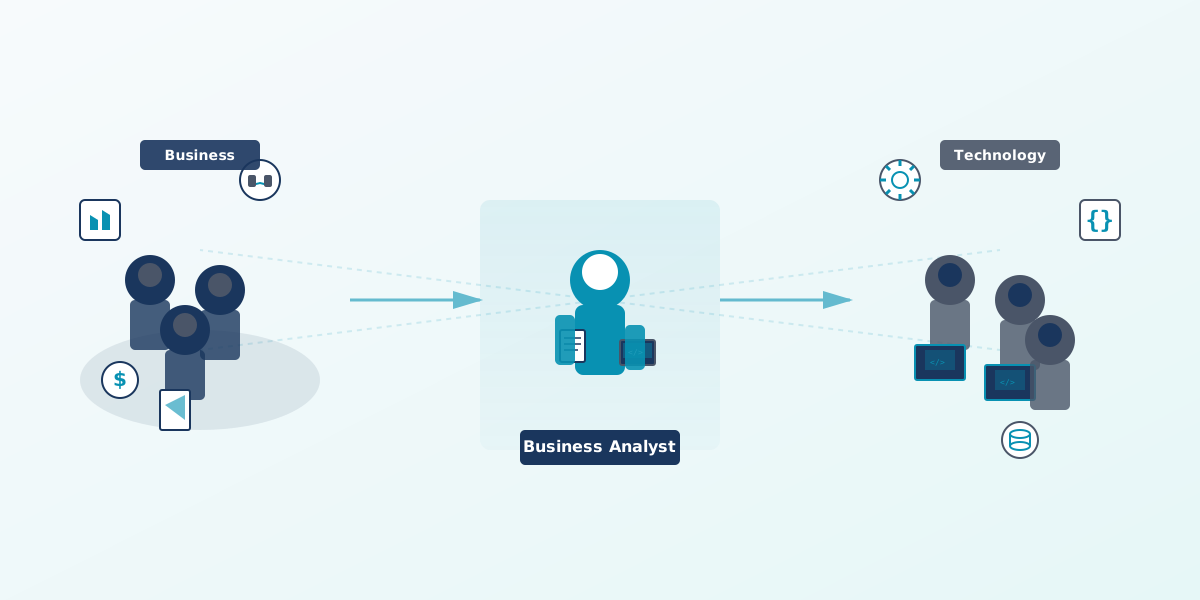
Business analysis is the professional discipline of identifying organisational needs and determining solutions to business problems. Unlike consultants who recommend strategies or project managers who coordinate execution, business analysts serve as the essential bridge between stakeholders who understand what needs to change and technical teams who implement those changes. Every successful digital transformation, system implementation, or process improvement depends on someone translating ambiguous business requirements into precise, actionable specifications that development teams can execute confidently.

Business analyst as bridge between stakeholders and technical teams
The Core

The Five Core Responsibilities

Business analysts perform five interconnected responsibilities that together ensure projects deliver intended value. Understanding these clarifies why organisations consistently report that effective business analysis correlates with forty-two per cent better project outcomes compared to projects lacking structured BA involvement.

1

Requirements Elicitation

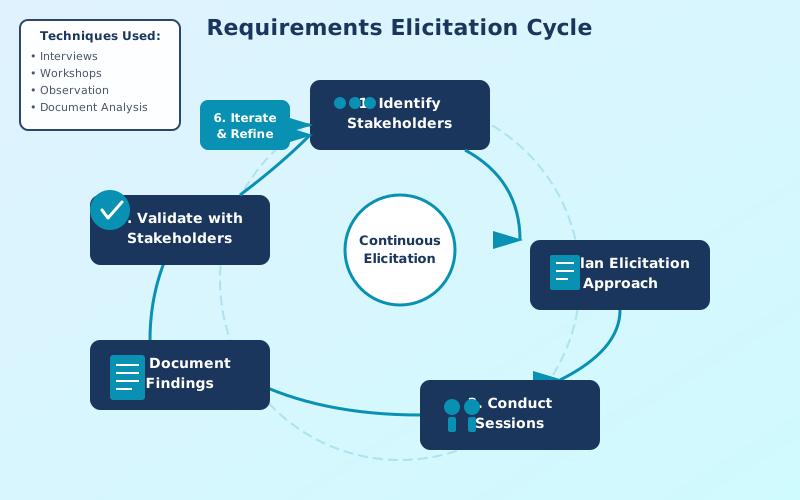
Requirements Elicitation represents the systematic discovery of what stakeholders actually need rather than what they initially request. This involves conducting workshops, interviews, observation sessions, and document analysis to uncover not only stated requirements but also implicit needs that stakeholders cannot articulate. Effective elicitation requires skilled questioning that moves beyond surface-level wants to underlying business problems, understanding that stakeholders often describe solutions they've imagined rather than problems they're experiencing. The business analyst must translate these solution requests back into fundamental requirements that allow technical teams to propose optimal approaches.

2

Requirements Analysis and Documentation

Once requirements are gathered, business analysts analyse them for completeness, consistency, feasibility, and alignment with strategic objectives. This analysis phase identifies conflicts between different stakeholder groups, reveals gaps in understanding, and prioritises requirements based on business value and implementation complexity. Documentation transforms this analysis into specifications that developers can implement—whether through traditional requirements documents, user stories, process models, or data flow diagrams. The format varies by methodology and organisational preference, but the fundamental purpose remains constant: creating a shared understanding between business and technical teams about what will be built.

3

Solution Assessment and Validation

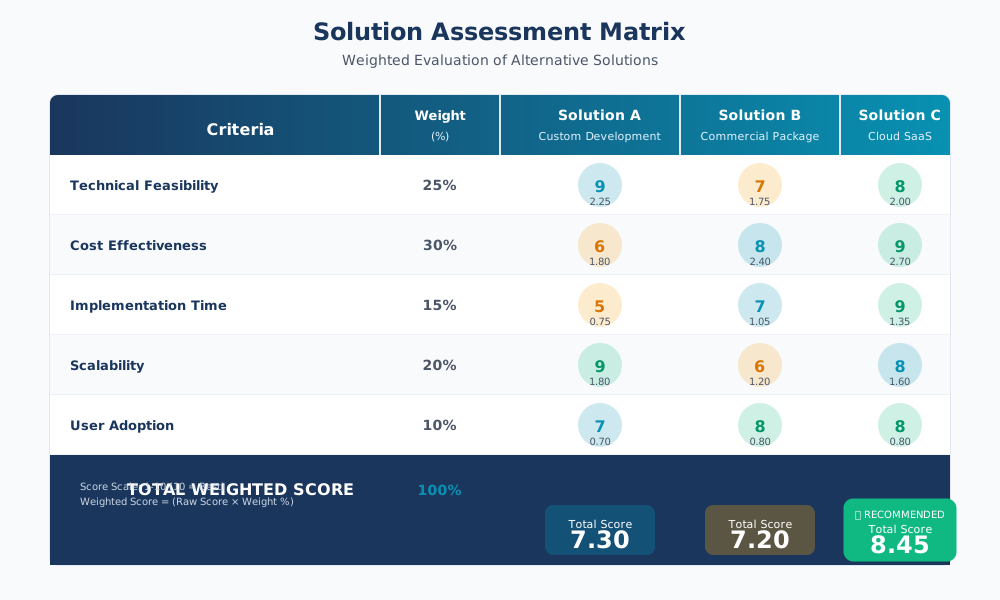
Business analysts evaluate proposed solutions against defined requirements and business objectives, ensuring technical approaches actually solve the identified problems. This involves assessing whether solutions are technically feasible, economically viable, operationally practical, and aligned with organisational constraints. During implementation, BAs validate that delivered functionality matches specifications through user acceptance testing, ensuring the solution performs as intended in real-world scenarios. This validation extends beyond technical correctness to confirm that the solution delivers expected business value and user adoption.

4

Stakeholder Management and Communication

Effective business analysis depends on managing diverse stakeholder groups with competing interests, varying levels of technical understanding, and different communication preferences. Business analysts identify key stakeholders, analyse their influence and interest levels, and develop appropriate engagement strategies for each group. This includes facilitating workshops where conflicting requirements are resolved, presenting complex information in accessible ways for executive audiences, and maintaining ongoing communication throughout project lifecycles. The BA serves as the primary communication hub, ensuring all parties remain informed and aligned as projects progress.

5

Change Management and Business Process Improvement

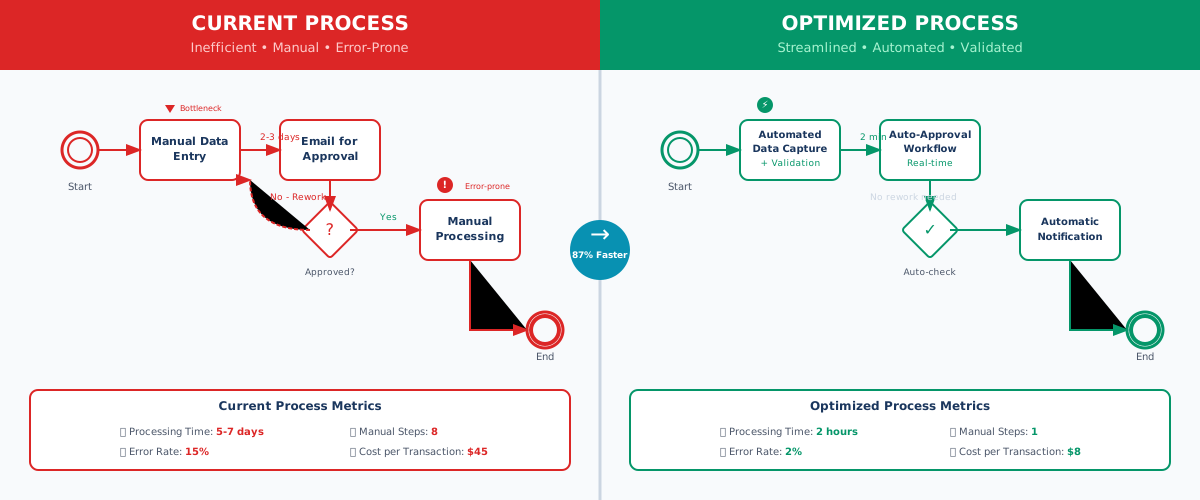
Beyond implementing specific solutions, business analysts drive continuous improvement by identifying inefficiencies in current processes and recommending optimisations. This involves mapping existing workflows, analysing bottlenecks and waste, and designing improved processes that leverage new technologies or revised procedures. BAs also facilitate organisational change by preparing stakeholders for new systems or processes, developing training materials, and supporting users through transitions. This change management aspect ensures that implemented solutions actually get adopted rather than becoming expensive systems that nobody uses.

Requirements elicitation process workflow diagram showing continuous cycle
Solution assessment matrix comparing three alternatives with weighted scoring
Process improvement comparison showing current inefficient process vs optimized streamlined process
Evolution

Historical Context: The Evolution of Business Analysis

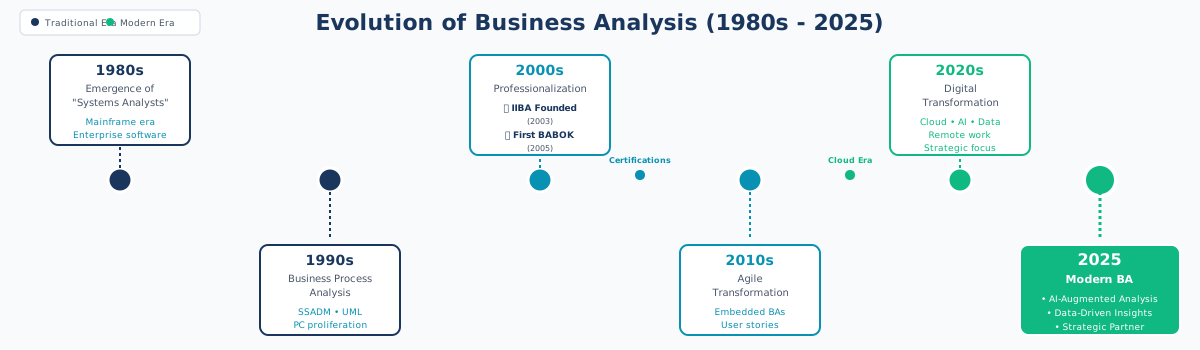
The business analysis profession emerged in the 1980s as organisations implementing enterprise software systems recognised they needed specialists who could bridge the gap between business operations and information technology. Early "systems analysts" focused primarily on translating business requirements into technical specifications for mainframe applications. As personal computing proliferated in the 1990s, these roles evolved to encompass broader business process analysis, with practitioners adopting formal methodologies like SSADM (Structured Systems Analysis and Design Method) and UML (Unified Modelling Language).

The profession professionalised significantly in the 2000s with the establishment of the International Institute of Business Analysis (IIBA) in 2003 and publication of the first Business Analysis Body of Knowledge (BABOK) in 2005. These developments standardised practices, established certification programmes, and elevated business analysis from an informal role to a recognised profession with defined competencies and career paths. The rise of Agile methodologies in the 2010s challenged traditional BA approaches, leading to role evolution toward more collaborative, iterative practices where BAs work embedded within development teams rather than as separate requirements gatekeepers.

Evolution timeline of business analysis profession from 1980s to 2025

Today's business analysts operate in a dramatically different environment than their predecessors. Digital transformation initiatives, cloud computing, artificial intelligence, and data analytics have expanded the BA remit beyond traditional requirements documentation. Modern BAs must understand technical architectures, data science principles, user experience design, and strategic business planning. The profession continues evolving rapidly, with emerging specialisations in areas like data analytics, Agile coaching, and digital strategy reflecting the growing complexity and strategic importance of business analysis work.

Impact

Why Business Analysis Matters: Quantified Organisational Impact

Organisations that invest in professional business analysis capabilities demonstrate measurably better project outcomes across multiple dimensions. Research from the Project Management Institute consistently shows that projects with dedicated business analysis resources achieve success rates 42% higher than those without structured requirements management. This improvement manifests through reduced rework (when requirements are clear from the outset, developers build correctly the first time), faster time-to-market (because teams don't waste time building wrong features), higher user satisfaction (solutions actually address real needs), and lower total cost of ownership (well-designed solutions require less maintenance and support).

The cost of poor requirements remains staggering. Industry research indicates that requirements defects discovered during development cost 10 times more to fix than those identified during requirements phase, whilst defects found after deployment cost 100 times more. When business analysts identify ambiguities, conflicts, and gaps early, they prevent exponentially more expensive corrections later. A single missed requirement that makes it into production might cost thousands in emergency fixes, lost revenue, or customer dissatisfaction—far exceeding the investment in thorough upfront analysis.

Digital transformation success increasingly depends on business analysis expertise. As organisations invest billions in cloud migrations, AI implementations, and process digitisation, the complexity of translating business strategies into technical realities grows proportionally. Business analysts who understand both domains enable these transformations by ensuring technical investments actually deliver business value rather than becoming expensive technology implementations that fail to achieve strategic objectives. This bridging capability explains why demand for skilled business analysts consistently outpaces supply, with median salaries reflecting the profession's strategic value.
Keep Going

Understanding the Modern BA Role

Now that you understand the fundamentals, discover how the BA role has evolved in 2025.